


Faux Leather Fabric – Premium Vegan Leather by the Yard | Joann
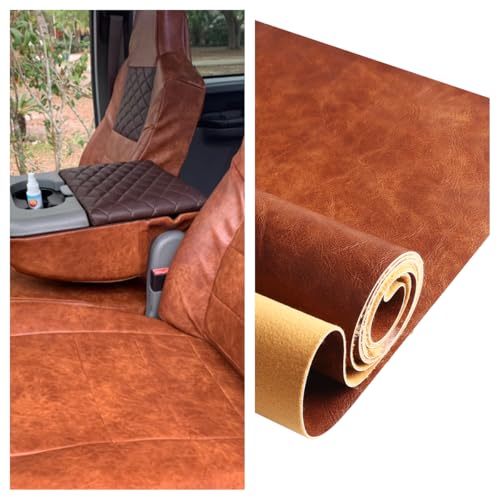
Our premium faux leather fabric delivers the sophisticated look and supple feel of genuine leather without the animal byproducts. This vegan leather alternative features a durable polyurethane coating bonded to a woven backing, creating a material that’s both flexible and remarkably resilient.
Perfect for upholstery projects, garment construction, and accessory crafting, this Joann’s leather fabric handles like traditional leather while offering easier care and maintenance. The medium-weight construction drapes beautifully for clothing while providing enough body for structured bags, wallets, and home décor applications. Available by the yard in classic neutrals and on-trend fashion colors.
Material & performance details
Construction & Durability of Faux Leather
Our faux leather fabric consists of a polyurethane or PVC coating permanently bonded to a woven textile backing, typically cotton-polyester blend. This construction method creates a material that mimics leather’s visual appeal and tactile qualities while offering superior resistance to cracking and peeling compared to earlier vinyl alternatives.
The backing fabric provides dimensional stability and tear resistance, while the coating delivers the signature leather look and easy-clean surface. Unlike genuine leather, which requires special conditioning and can dry out over time, our vegan leather maintains its appearance and flexibility through years of use with minimal maintenance. The uniform thickness across the entire yardage ensures consistent results in upholstery applications where pattern matching matters.
Project Applications & Creative Uses
Upholstery & Home Décor
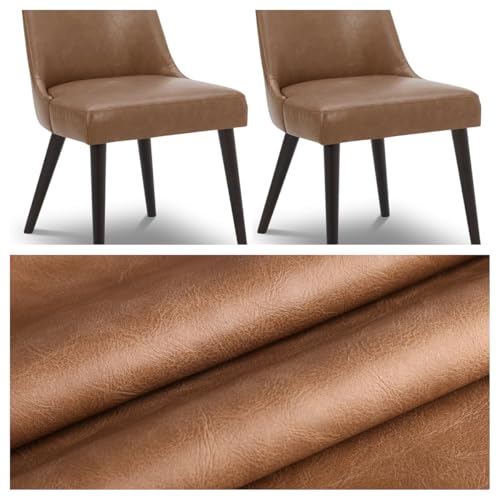
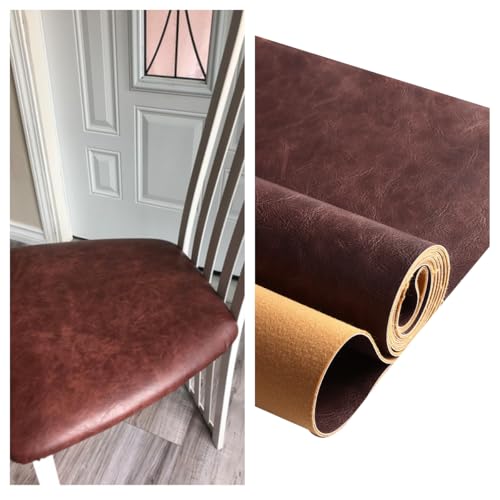
Our 54-58 inch wide faux leather provides efficient coverage for furniture upholstery projects including dining chairs, ottoman tops, headboards, and bench cushions. The wipe-clean surface makes it particularly practical for family spaces, kitchen seating, and high-traffic areas where spills happen. Many customers choose this material for outdoor cushion covers since it resists moisture better than traditional fabric options.
Home decorators also use faux leather for decorative pillows, table runners, and wall art. The material’s body allows it to hold shape in three-dimensional projects like storage bins and organizer baskets.
Cutting & Sewing Techniques
Faux leather cuts most cleanly with a sharp rotary cutter and self-healing mat, though fabric scissors work well for smaller pieces and curved cuts. Pin holes remain visible in the finished project, so we recommend using pattern weights, clips, or pins only within seam allowances that will be hidden.
When sewing, tissue paper or wash-away stabilizer placed between the presser foot and fabric prevents sticking and drag. Reduce presser foot pressure if your machine allows this adjustment. Skip backstitching at seam beginnings and ends—instead, leave long thread tails and tie them off manually, as repeated stitching creates perforations that can tear.
More Specialty Fabrics for Upholstery & Crafts


Rated 4.8 by verified buyers
Faux Leather Fabric Questions
Yes, our faux leather works beautifully with standard home sewing machines when you use the right accessories and settings. We recommend using a leather or denim needle (size 90/14 or 100/16) and increasing your stitch length to 3.0-3.5mm to prevent perforating the material.
A walking foot or Teflon foot helps the fabric feed smoothly without sticking. Reduce your presser foot pressure if your machine has that adjustment, and place tissue paper between the foot and fabric to prevent drag. These simple adjustments ensure professional-looking seams every time.
Since pin holes remain permanently visible in faux leather, avoid pinning through areas that will show on the finished project. Instead, use pattern weights to hold pattern pieces in place while cutting, or use Wonder Clips or binding clips to hold layers together during sewing.
If you must use pins, place them only within seam allowances that will be hidden on the inside of the project. Alternatively, use a small piece of removable tape in areas where clips can’t reach. These techniques keep your fabric surface unmarked and professional-looking.
Faux leather and vinyl are closely related materials, but faux leather specifically refers to products designed to replicate the look and feel of genuine leather. Our faux leather features a textile backing (usually cotton-poly blend) that gives it more drape and flexibility than traditional vinyl, which often has a knit backing or no backing at all.
The polyurethane coating on quality faux leather is formulated to mimic leather’s texture and suppleness, while standard vinyl tends to be stiffer and more plastic-like. For upholstery and apparel, faux leather provides a more authentic appearance and better performance than basic vinyl alternatives.
We don’t recommend machine washing faux leather projects, as the agitation and heat can damage the coating and cause peeling or cracking over time. Instead, spot clean finished items with a damp cloth and mild soap solution, which effectively removes most dirt and stains while preserving the material.
For garments that need freshening, hand wash gently in cool water with mild detergent, then air dry flat or hanging. Never put faux leather in the dryer, as heat accelerates deterioration. Most faux leather items stay cleaner longer than fabric alternatives since spills and marks wipe away easily from the smooth surface.
Most standard dining chairs require 3/4 to 1 yard of 54-inch wide faux leather per chair for seat cushions. If you’re covering both the seat and chair back, plan for 1.5 to 2 yards per chair depending on the size. Chairs with arms or larger proportions may need additional yardage.
We recommend measuring your chair’s seat dimensions and adding 6-8 inches in each direction for pull-around and stapling allowance. For multiple chairs, it’s wise to purchase an extra half yard beyond your calculation to account for pattern placement and any mistakes during the upholstery process.
Quality faux leather maintains its shape better than genuine leather and doesn’t stretch significantly with use. The woven backing provides dimensional stability, preventing the sagging and stretching that can occur with real leather upholstery or garments over time.
This stability is actually an advantage for upholstery projects and structured bags where you want the material to hold its shape. For garments, choose appropriate weight and construction methods rather than relying on stretch. If you need stretch for activewear or fitted garments, look for faux leather with added spandex in the backing, which we offer in select styles.
Yes, fabric glue and contact cement work excellently for many faux leather applications, particularly in bag making, accessories, and mixed-media projects. These adhesives create strong permanent bonds without creating needle holes, and they’re especially useful for attaching hardware, creating box corners, or laminating layers.
For best results with glue, rough up the back surface slightly with fine sandpaper to improve adhesion, then apply a thin even layer of adhesive to both surfaces. Allow contact cement to become tacky before pressing pieces together—this creates the strongest bond. Many professional bag makers combine gluing and topstitching for maximum durability in stress areas.